AKOOL AI Image Generator 2.0
Sole Designer
AI Creation Tool Redesign
End-to-End Design
Internship
+26%
Page Traffic
+18%
Daily Creations
3x
Cross-tool conversions
01
Background
1.1 About AKOOL
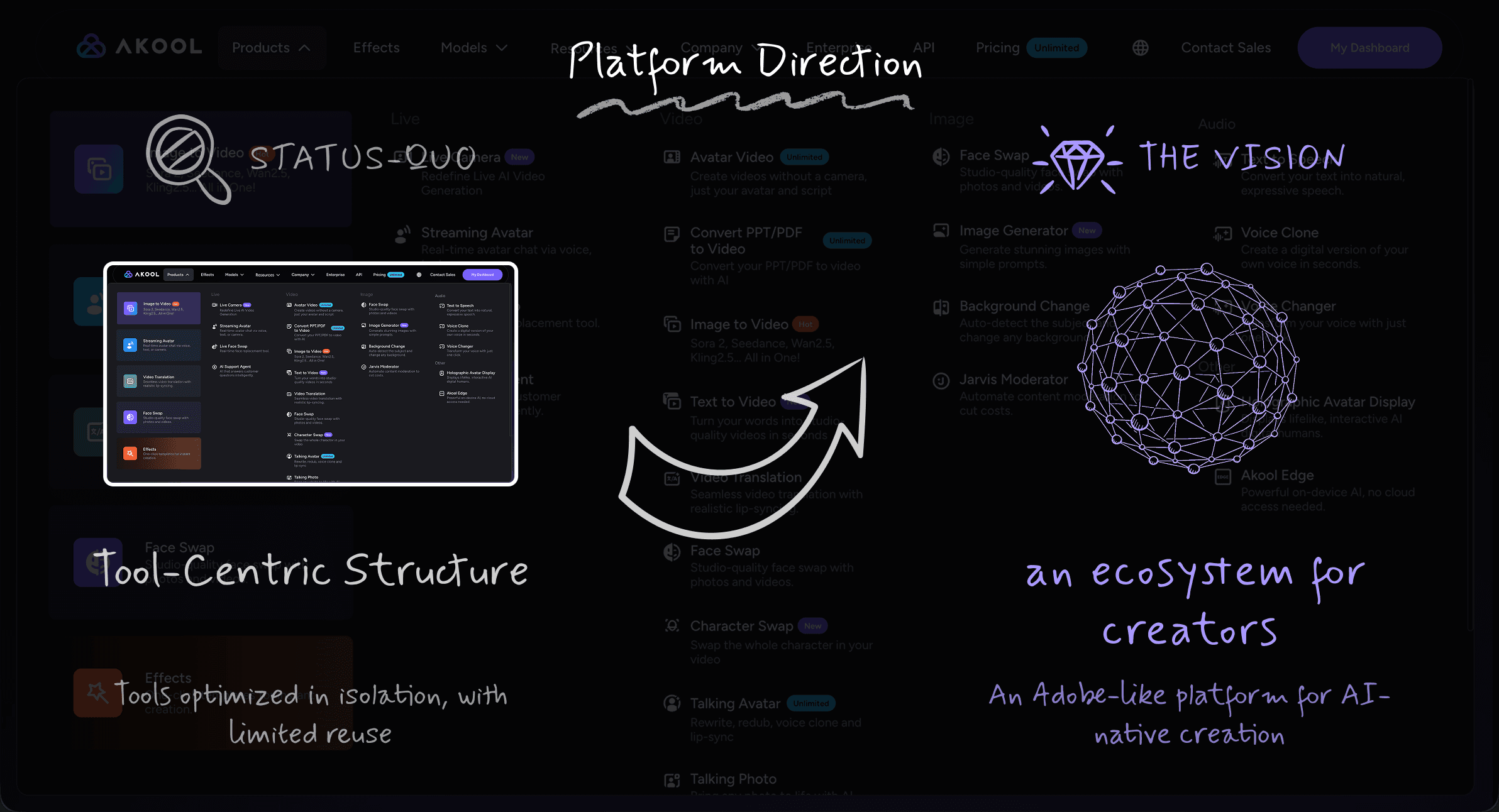
Akool is one of the fastest-growing AI creative companies in the US.
Users
Companies Using
The company builds a suite of AI video generation tools, including Image Generator, Image to Video, Face Swap, Talking Photo, Avatars, and Video Editing, with the goal of creating a unified ecosystem for creators.
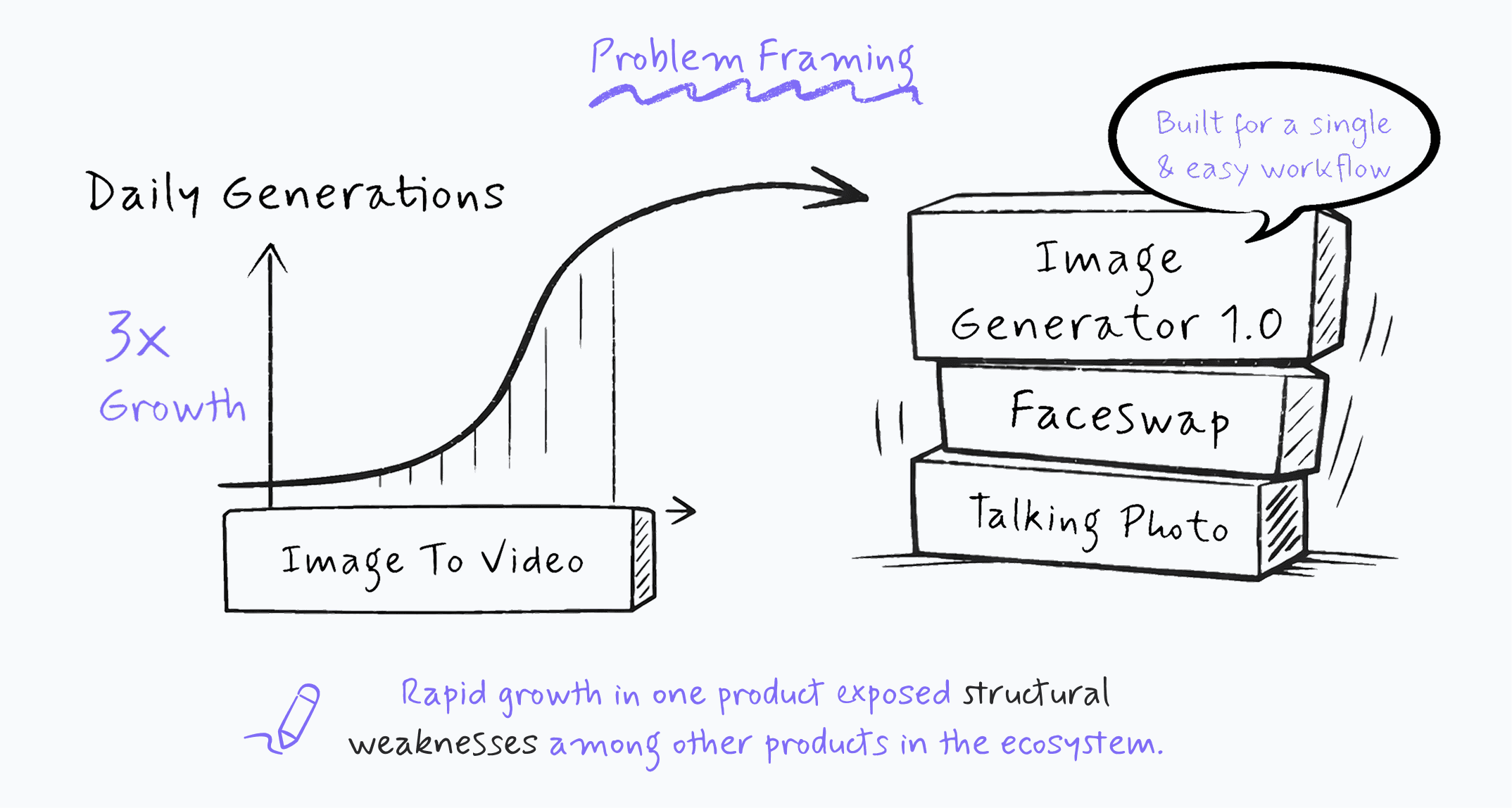
By early 2025, Image-to-Video went viral and tripled daily generations, bringing a large wave of new creators.
This sudden growth exposed critical gaps in the aging Image Generator 1.0, which had never been updated since launch.
1.2 Owning the End-to-End Redesign
For Image Generator 2.0, I independently drove:
🔍 UX research
✍️ UI Design
🧩 IA (Information Architecture) redesign
🎨 Design system updates
🔗 Cross-product alignment
📱 Responsive and mobile design
🛠️ Developer handoff and QA
Here’s a quick look at the product before and after the redesign.
02
Why Redesign
Before diving into the redesign, it’s important to understand why the old system could no longer support Akool’s growth.
Designed for a simple “upload → generate” workflow, IG 1.0 lacked the architecture needed for Akool’s fast expansion into a multi-model, multi-tool ecosystem.
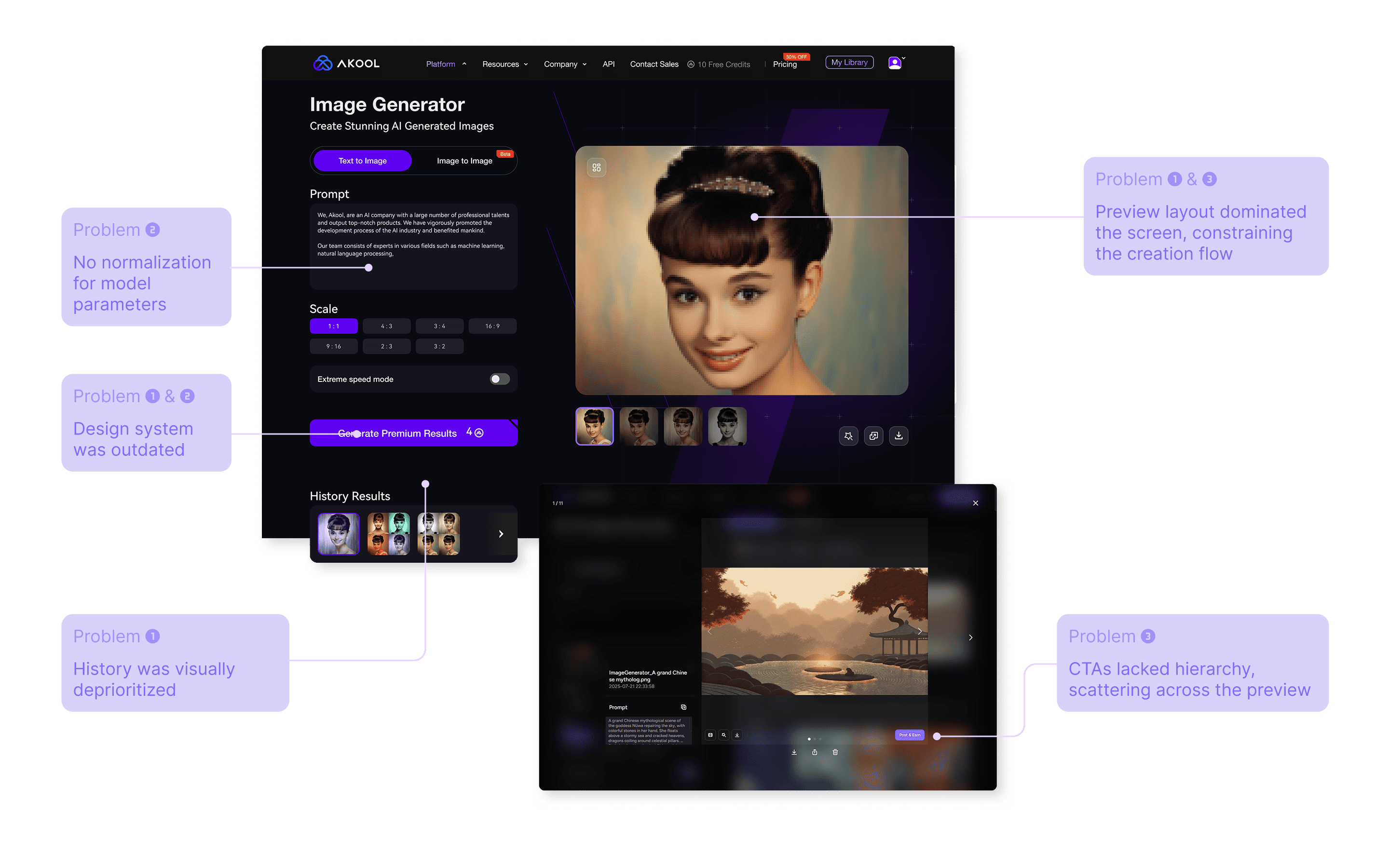
From the old experience, three systemic problems emerged.
Problem 1
A single-purpose IA couldn’t scale

Problem 2
No normalization layer across models

Problem 3
The Preview UX broke the workflow
How these problems appeared in the product:
We needed a system that could scale.
03
Design Strategy
In a fast-moving startup, design is often pulled into short-term fires.
Instead of letting urgency dictate the direction, I intentionally balanced immediate velocity with system-level decisions to prevent future UX debt and support scalable growth.
04
Key Design Decisions
4.1 Shifting to a Two-Pane IA
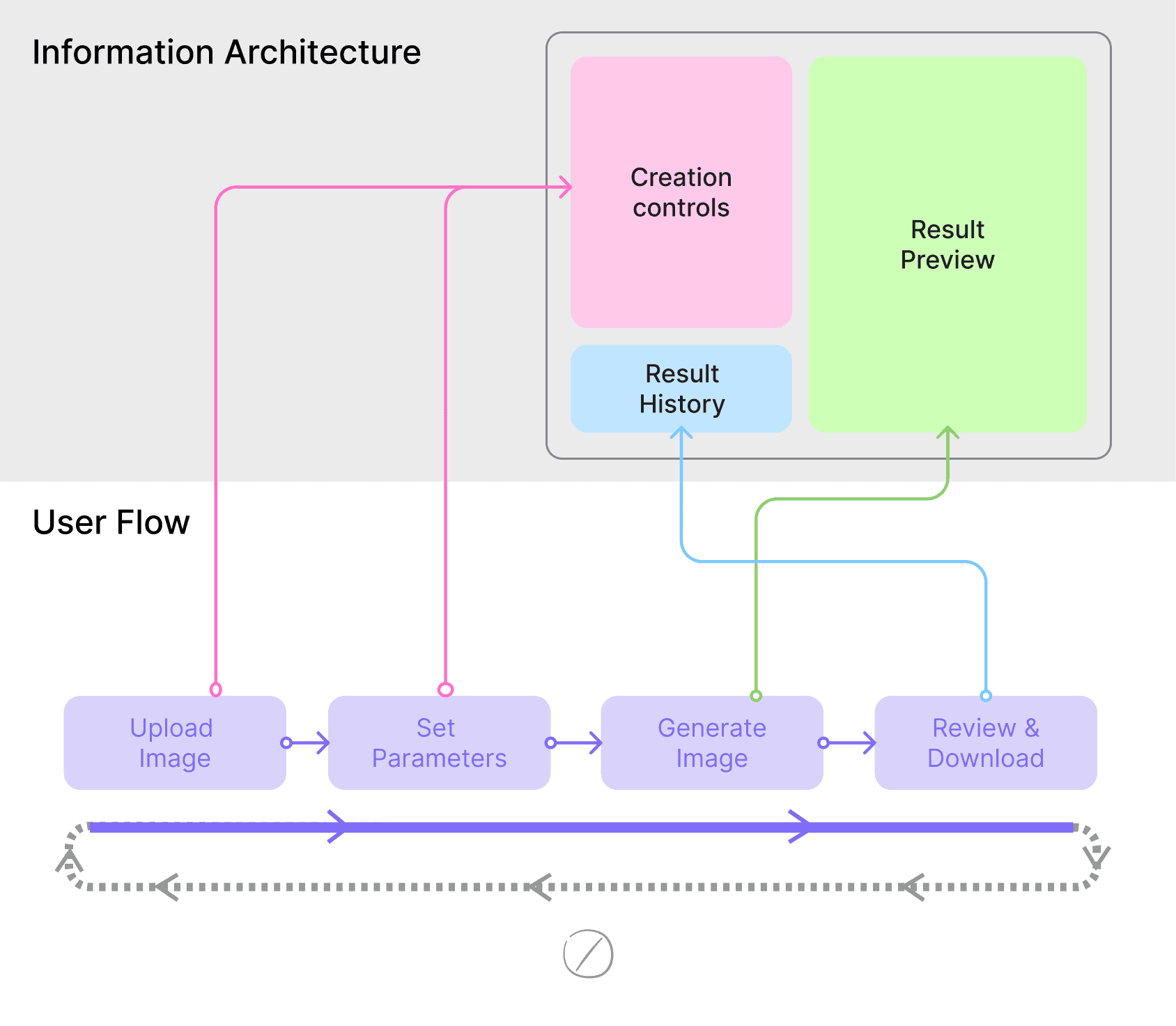
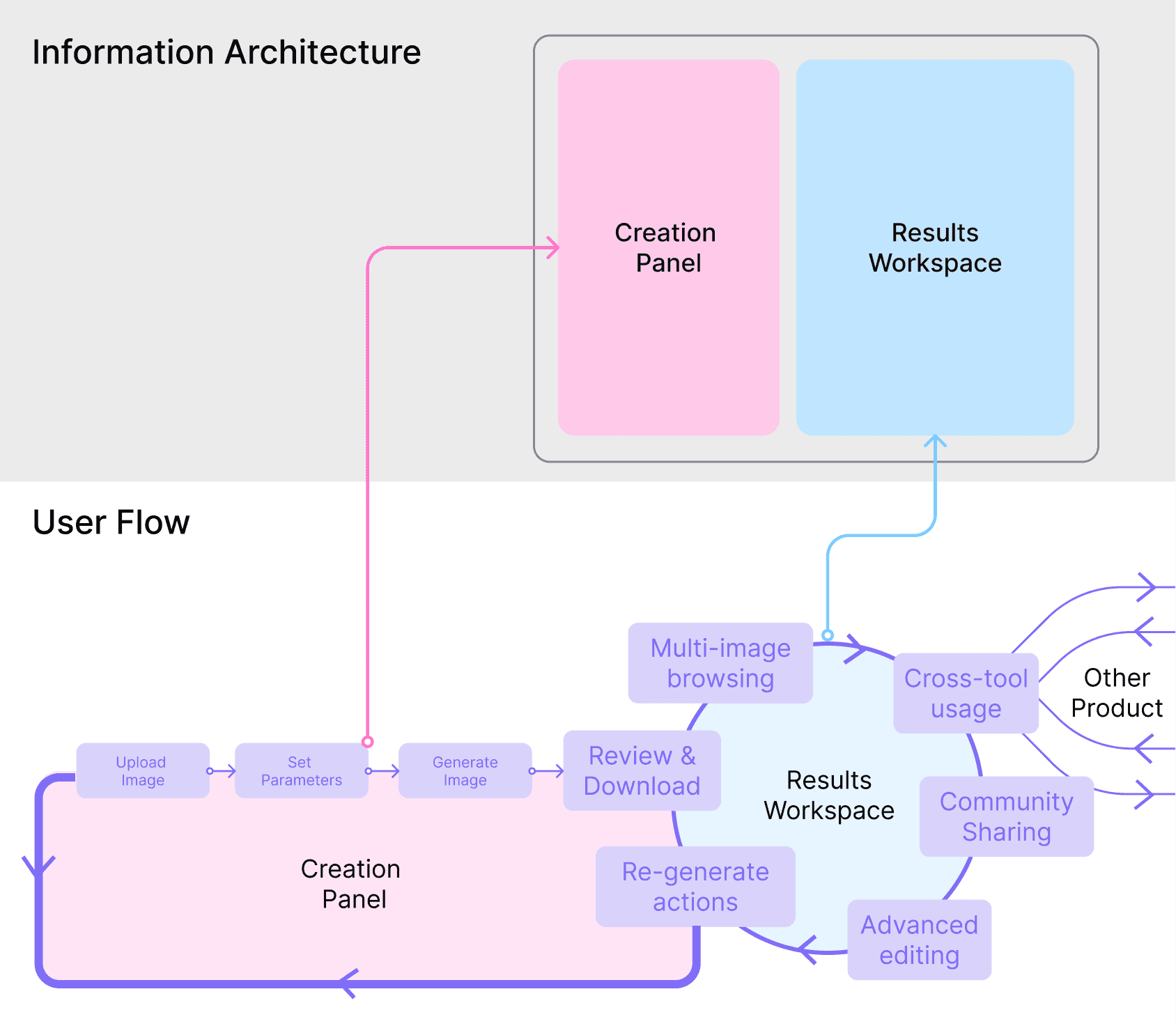
As Image Generator expanded to support new models, multi-image workflows, and cross-tool actions, the original information architecture began collapsing under increasing structural complexity.
Because the IA was tightly coupled to a linear, step-by-step user flow, users were forced down a single path—making iteration, result comparison, and reuse increasingly difficult as new features were added.
To unlock scalability, I restructured the workflow into a two-pane system—decoupling creation from result management for the first time.
Before
After
Trade-off
Adopting a two-pane IA required additional engineering effort and refactoring several core components.
Outcome
The redesigned IA became a platform pattern reused across other tools such as Image-to-Video, reducing long-term design and engineering alignment cost.
4.2 Turning Preview into a Platform-Level Module
Here’s how I uncovered and expanded this problem:
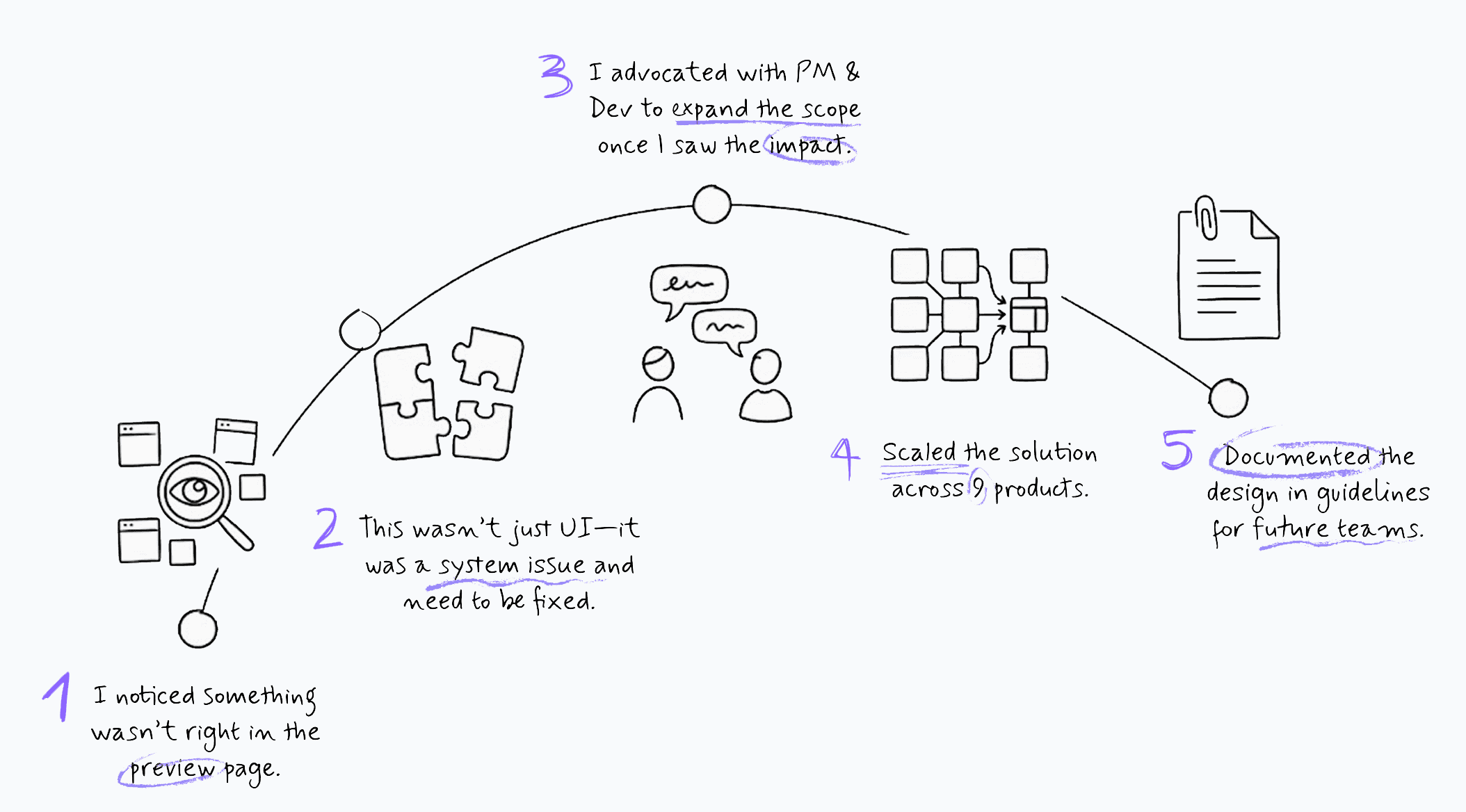
Preview inconsistencies across tools revealed a deeper issue: each product had evolved its own logic and workflows, making iteration and cross-tool usage increasingly difficult.
Although Preview wasn’t in my scope, the gap would limit future scalability — so I dug deeper instead of designing around it. What looked like a UI issue turned out to be a missing platform pattern.
I proposed a unified Preview model, aligned PM and engineering on expanding the scope, and scaled the system across nine products. The pattern is now part of our platform guidelines to ensure consistency moving forward.
The unified Preview model now scales consistently across image, video, and audio products.
Solution
1️⃣ A unified Preview architecture that supports consistent actions across tools
3️⃣ A media-agnostic structure enabling reuse across image, video, and audio products
Outcome
4.3 Simplifying a Multi-Image Result Grid
When redesigning the generation history, the core challenge was maintaining clarity as image count and aspect ratios varied.
At first, I tried to design a perfect grid solution. As shown in the attempts below, I mapped out layouts that could handle every combination of image count and aspect ratio.

However, as requirements shifted—from 8 images to 6, then to 4—engineering feedback made it clear that this approach would be difficult to build, maintain, and ship reliably.


Instead of continuing to enumerate edge cases, I reframed the problem with engineering:
What is the minimum set of layout rules that guarantees a stable and legible preview experience, regardless of image count or aspect ratio?
Based on this framing, I provided engineering with a small set of clear, implementation-ready design principles to build against.
Engineering implemented the grid using these rules, while I focused on validating edge cases, reviewing behavior across breakpoints, and ensuring the principles held consistently in real usage. This shifted complexity away from layout permutations toward a predictable, scalable system.
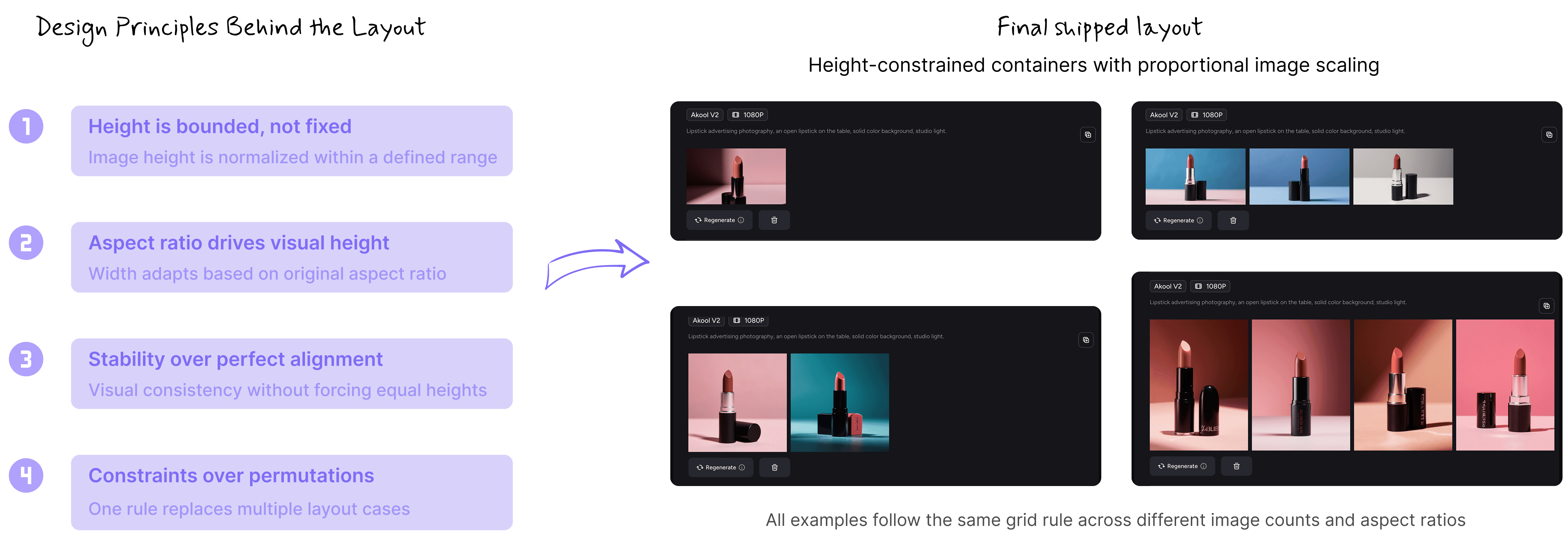
This made the layout easier to evolve without redesigning the grid each time requirements changed.
Trade-off
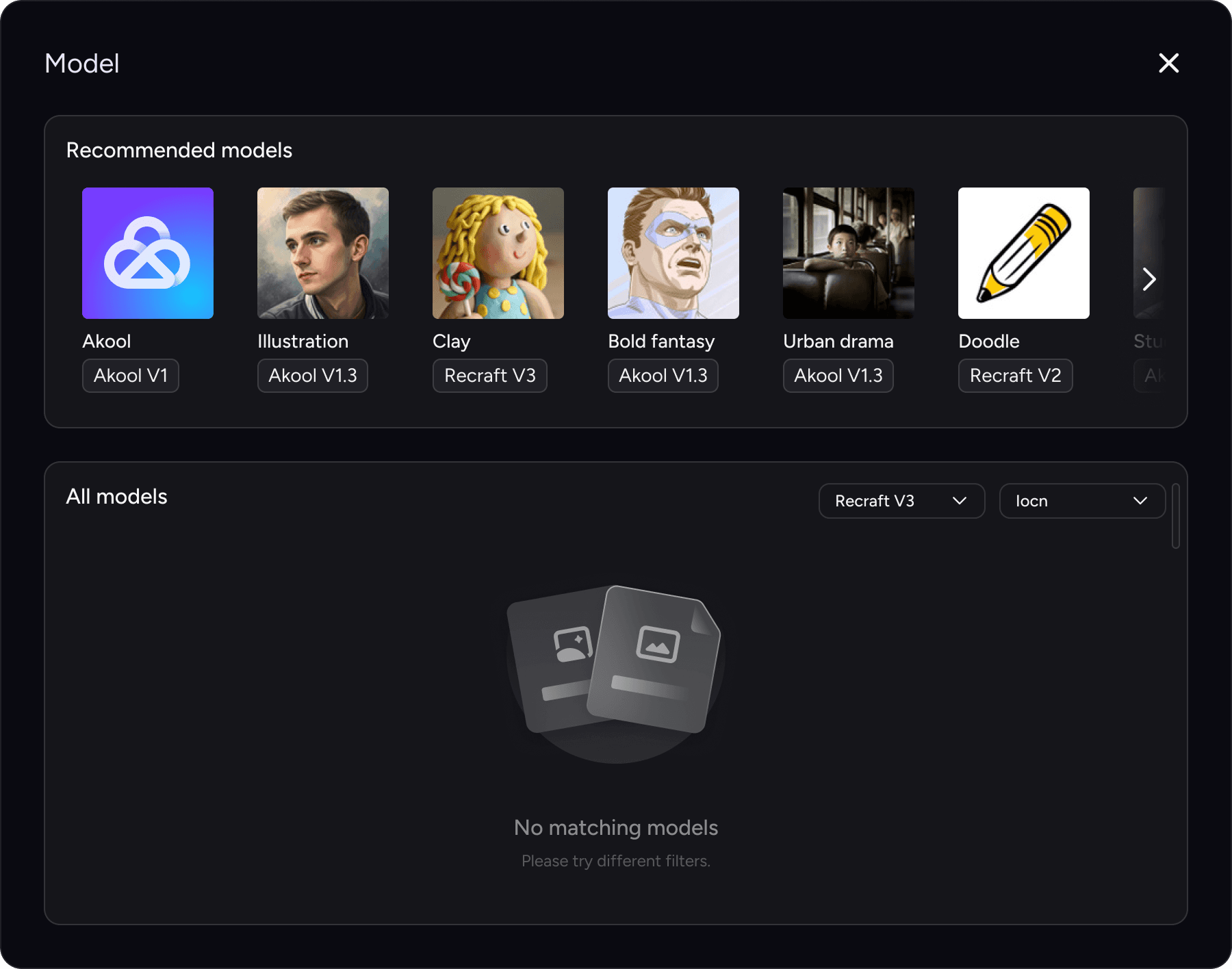
4.4 Designing a Unified Model & Style Picker for 100+ AI Models
Image Generator 2.0 marked a structural shift from a single model (Flux) to supporting multiple third-party providers, including Flux, Recraft, and HiDream.
This introduced significant asymmetry. Recraft alone added over 100 models with different styles, while others offered only a few—making a flat, model-first list difficult to scale without overwhelming users.
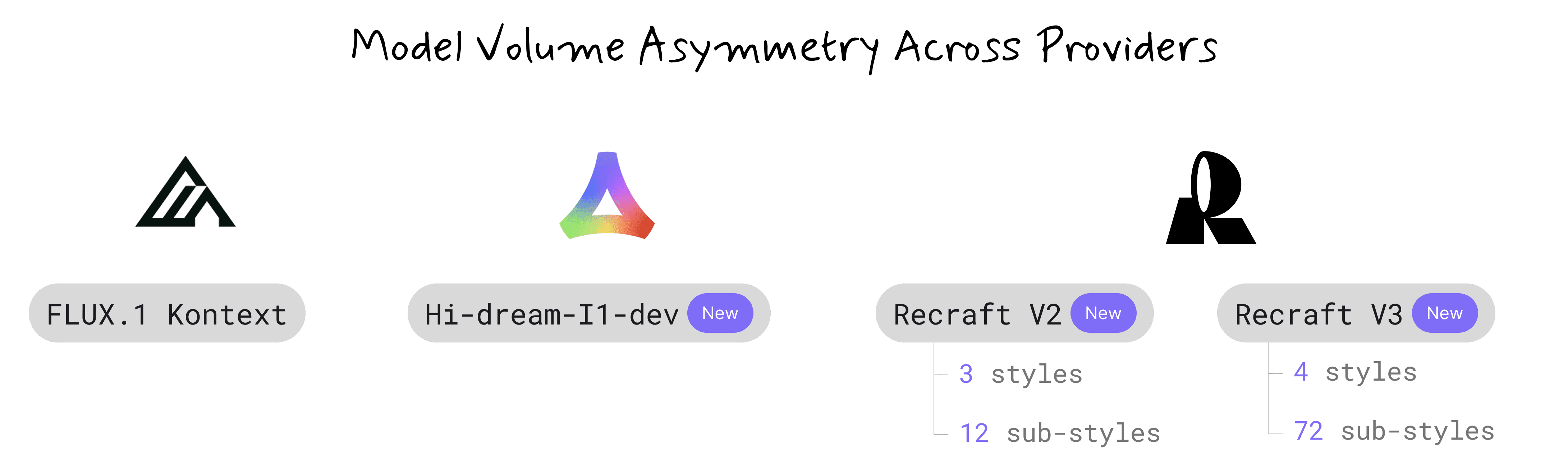
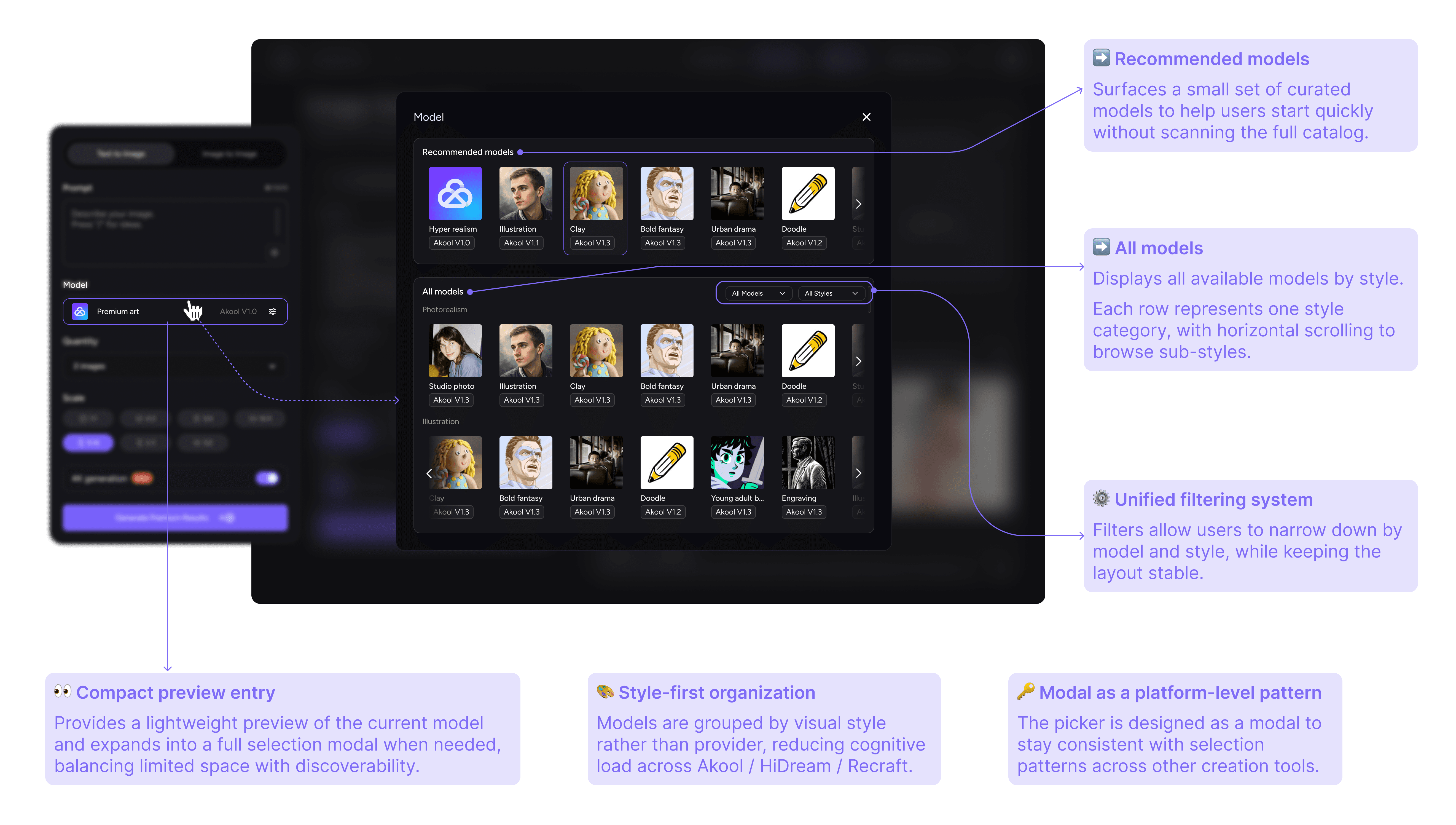
Rather than exposing models directly by provider, I organized the selection experience around visual intent.
This approach separates fast decision-making from deeper exploration, allowing users to choose based on creative intent while keeping the full catalog accessible.
Trade-off
Chose to organize selection around artistic style rather than exposing raw model distinctions, prioritizing user intent over technical accuracy.
Outcome
Enabled fast, predictable model selection across providers with highly uneven model volumes.
05
Impact
The tool became easier, faster, and more connected.
+26%
Page Traffic
+18%
Daily Creations
+37%
Ecosystem Impact
3x
More users sending images into Video, Face Swap, and Talking Photo.
Platform-level Adoption
9
Product Lines
Engineering Impact
-50%
Reduction in layout complexity
Enabling faster implementation of future features.
What users and stakeholders said after the redesign:
"This is the first time the preview feels like a real, scalable product."
-Klein, PM of the product
“Much easier to find models and iterate on results now!”
-Annonymous User
06
Reflection
This project shaped how I approach system design, problem framing, and product growth. Here are the key takeaways and what I would explore next.
6.1 Key Takeaways
Wrong assumptions must be corrected by data
We expected art models to be popular; however, data shows that users preferred simple, fast defaults.
This reminded me to verify desirability early and treat usage data as a design signal, not an afterthought.
Design must join the problem-definition stage earlier
Many v1 issues were rooted in early requirements.
6.2 Next Steps
A/B testing model density and grouping
Personalized model recommendations
More user interviews with professional creators
Data-driven refinement of cross-tool workflows
07
Other Designs
Beyond the core redesign, I explored a set of edge cases and responsive patterns to ensure the system remains stable, predictable, and scalable across different devices, models, and real-world usage scenarios.
These explorations were not the primary focus of the case study, but they reflect how I think about product completeness, system boundaries, and long-term maintainability.
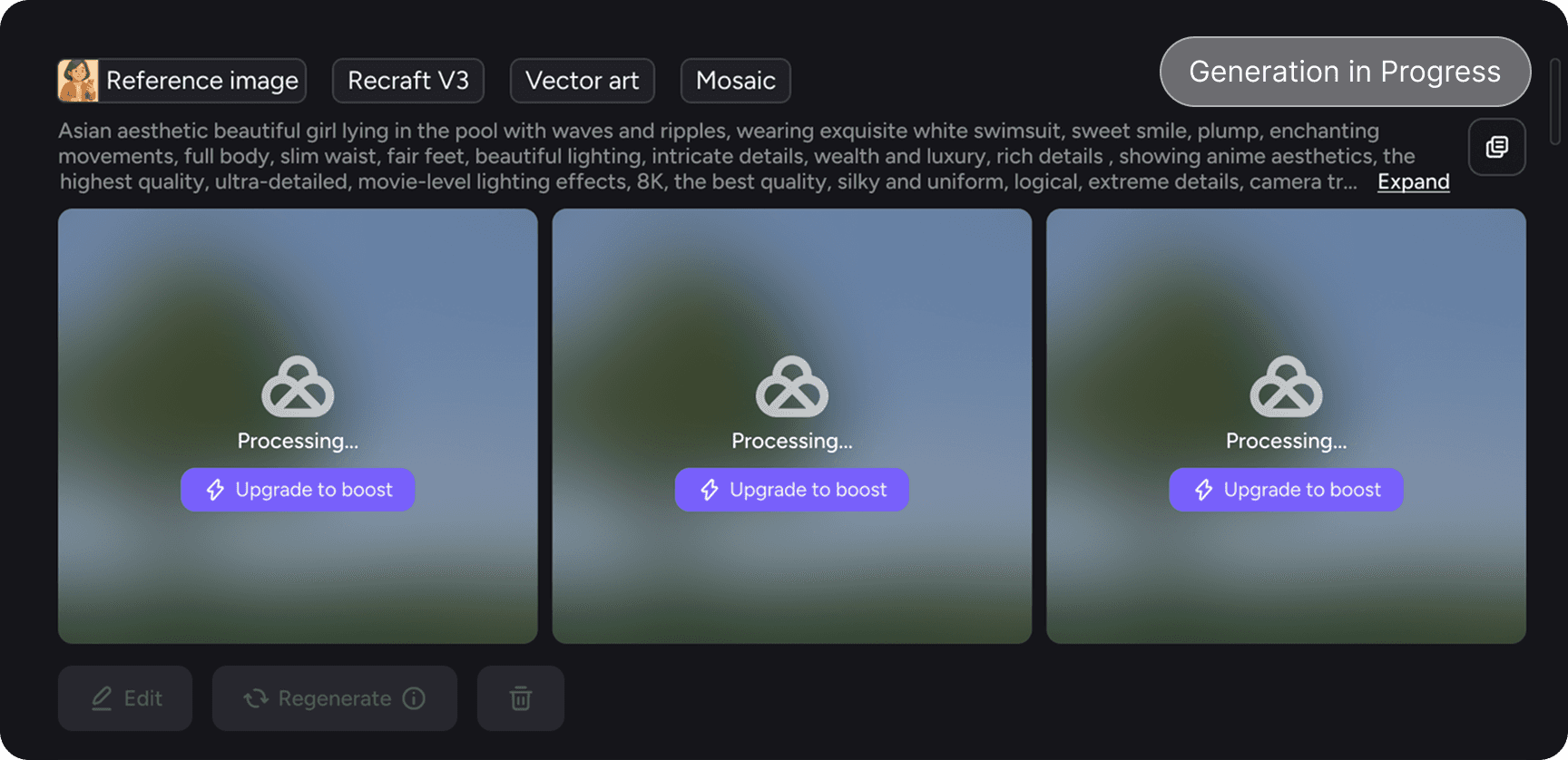
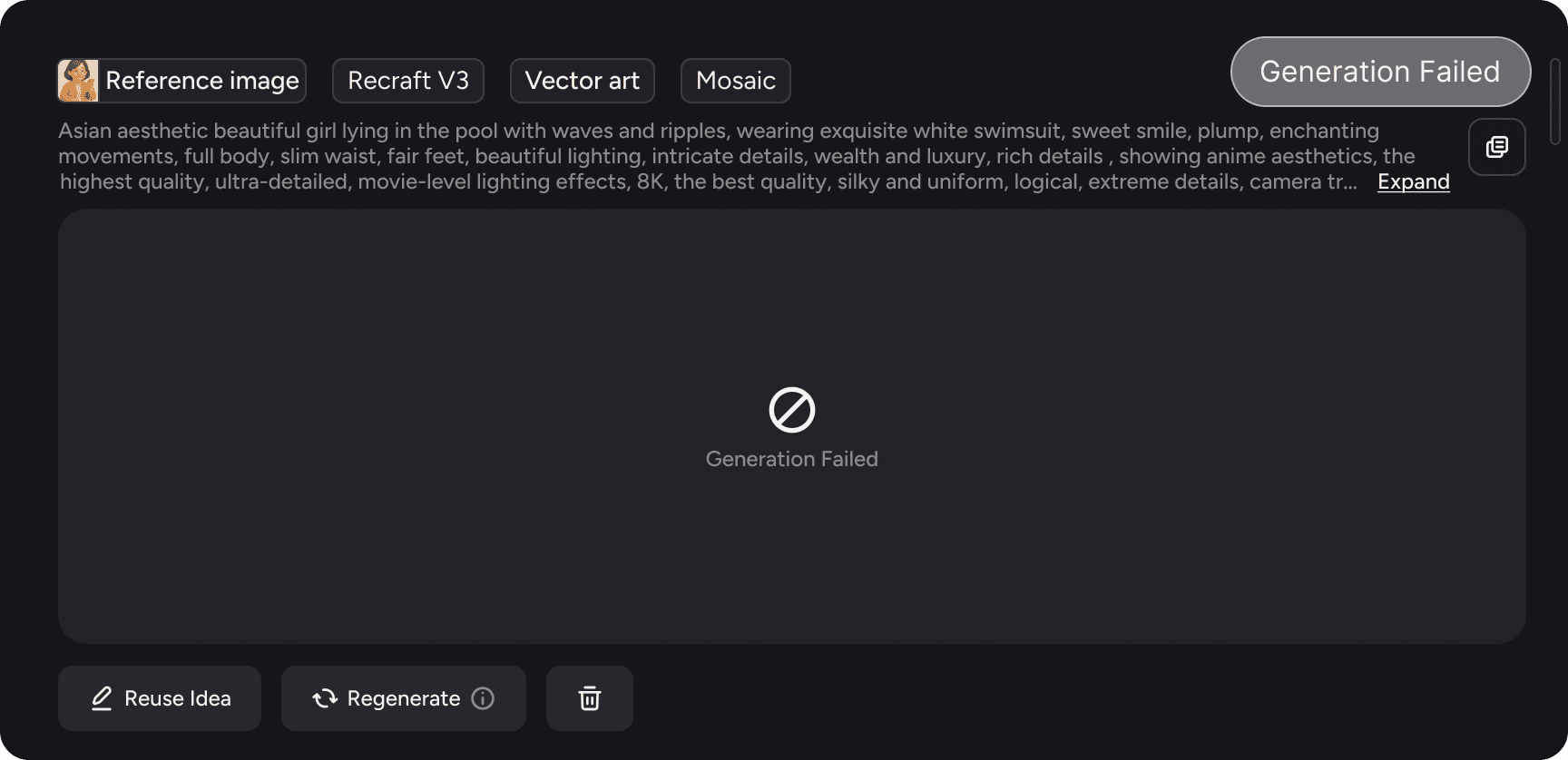
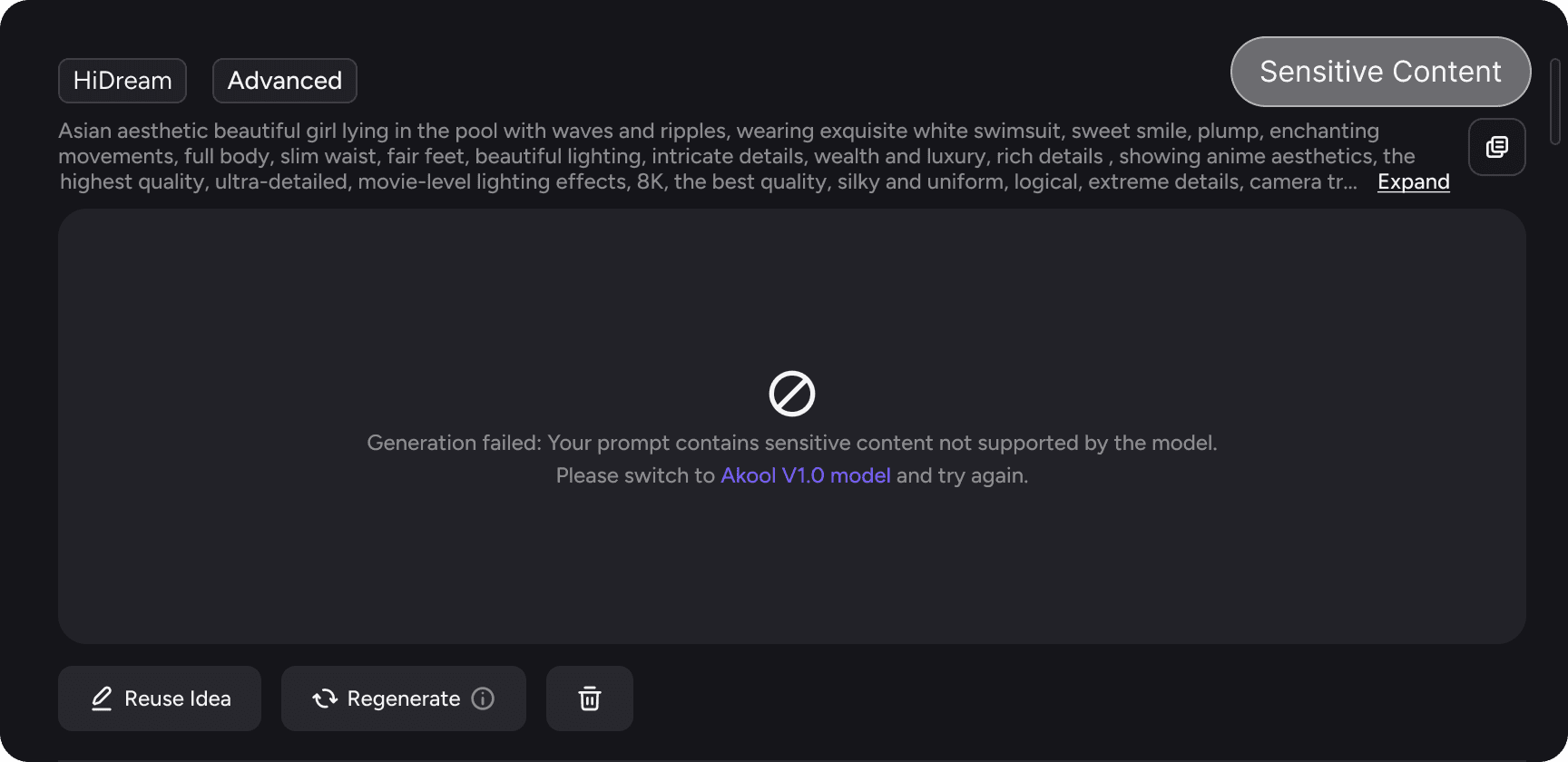
Error States
Includes processing generation, generation failure, and safety-blocked scenarios during image creation.
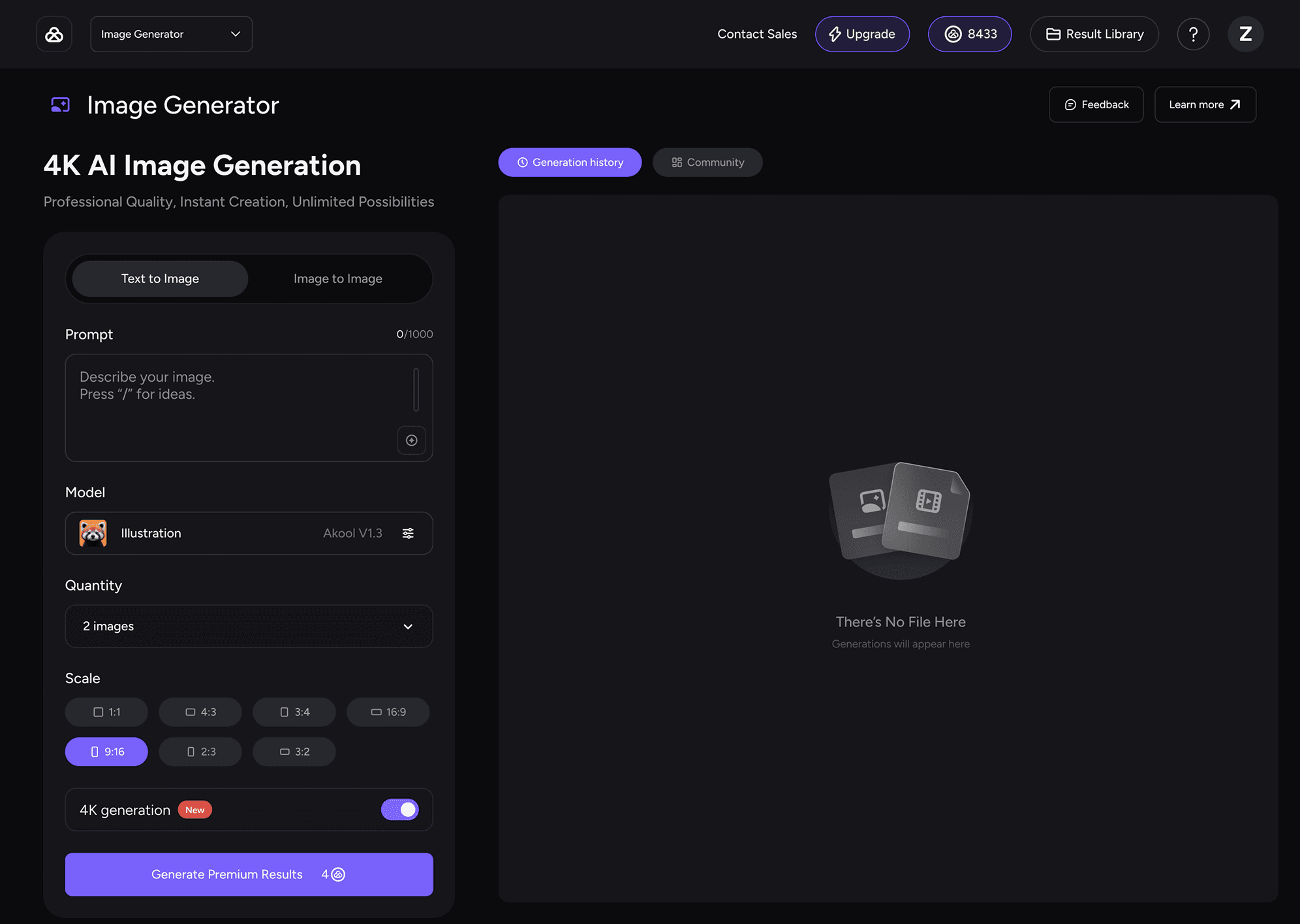
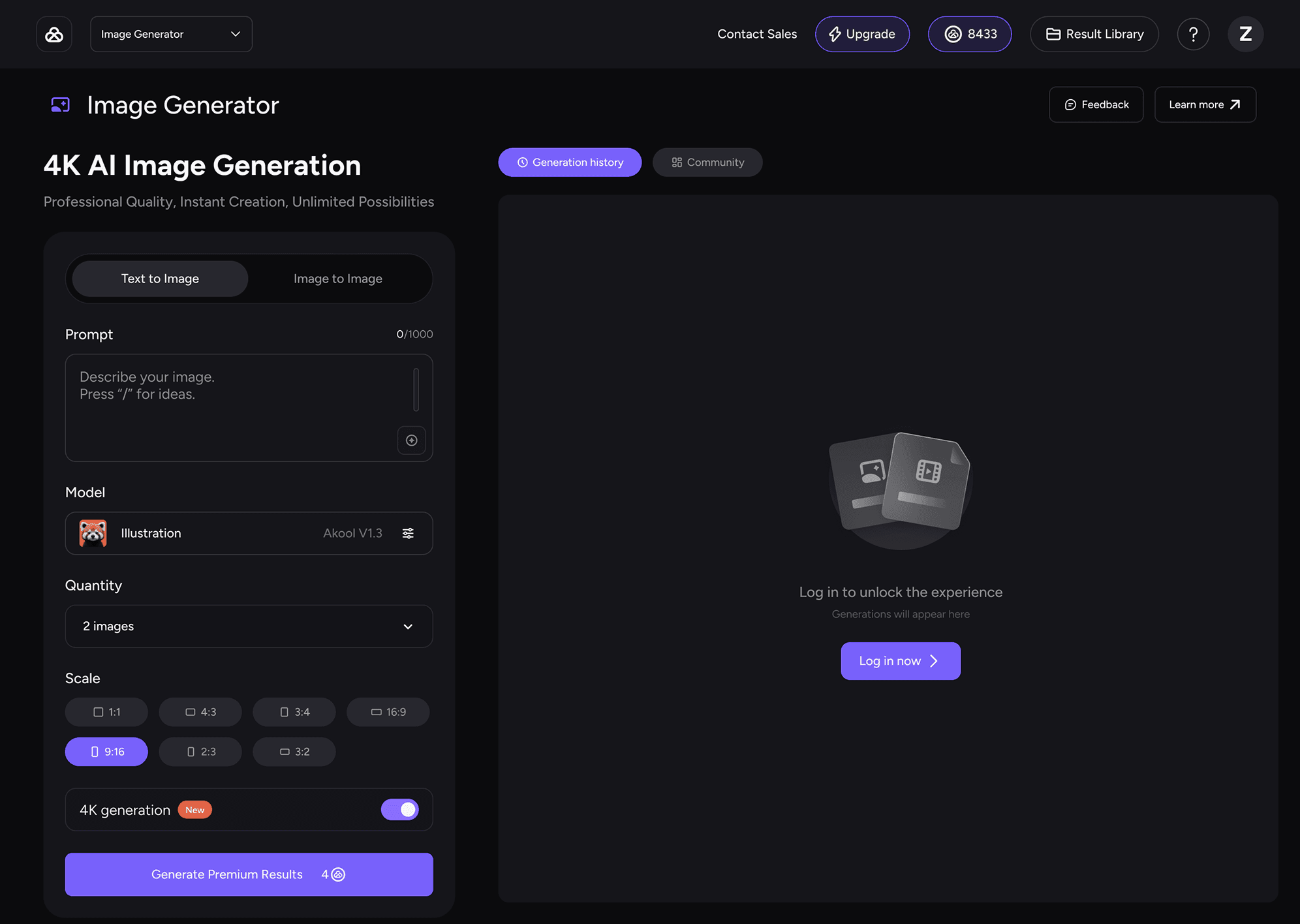
Empty States
Covers unauthenticated users, empty generation history, and missing styles for selected models.
Responsive Layouts
Shows responsive layouts across desktop, tablet, and mobile, with key controls and results preserved at every breakpoint.
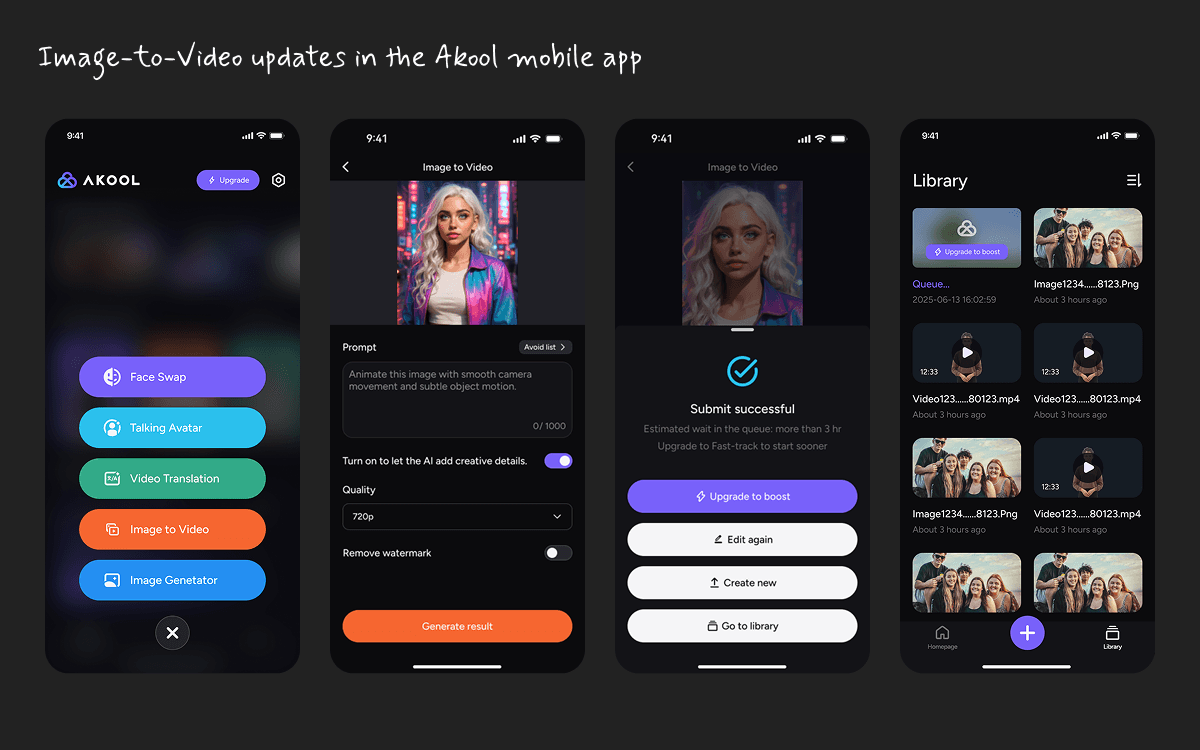
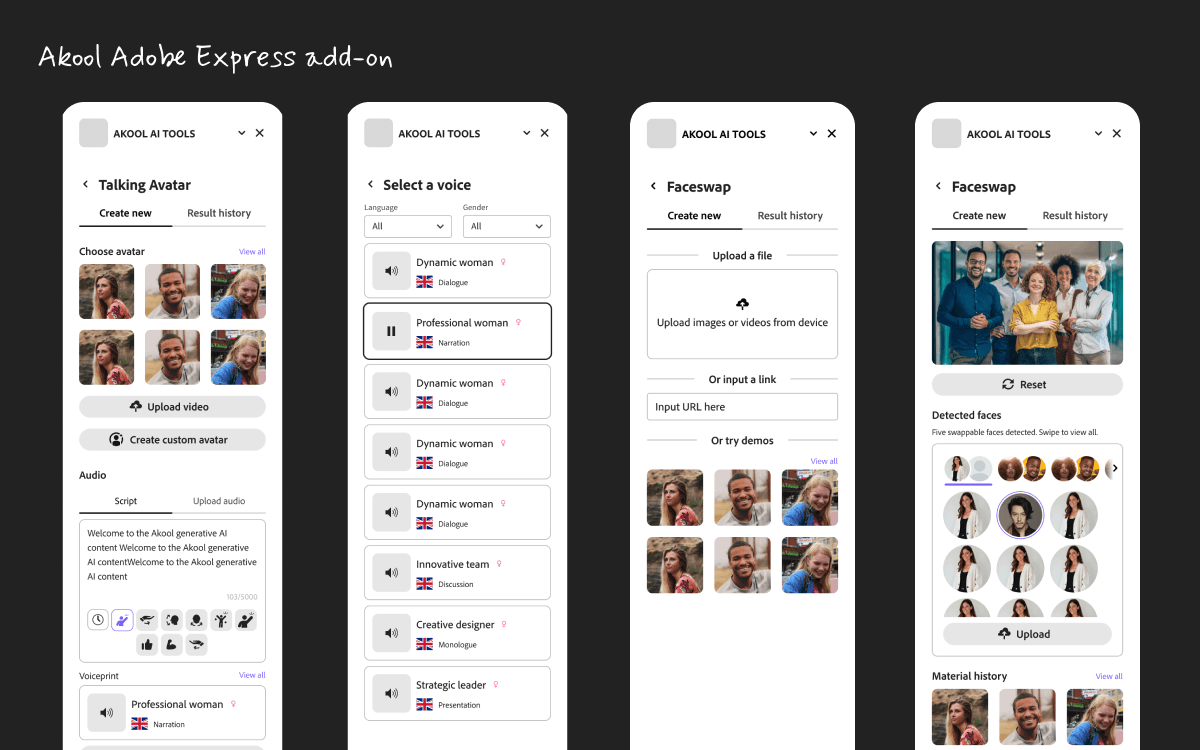
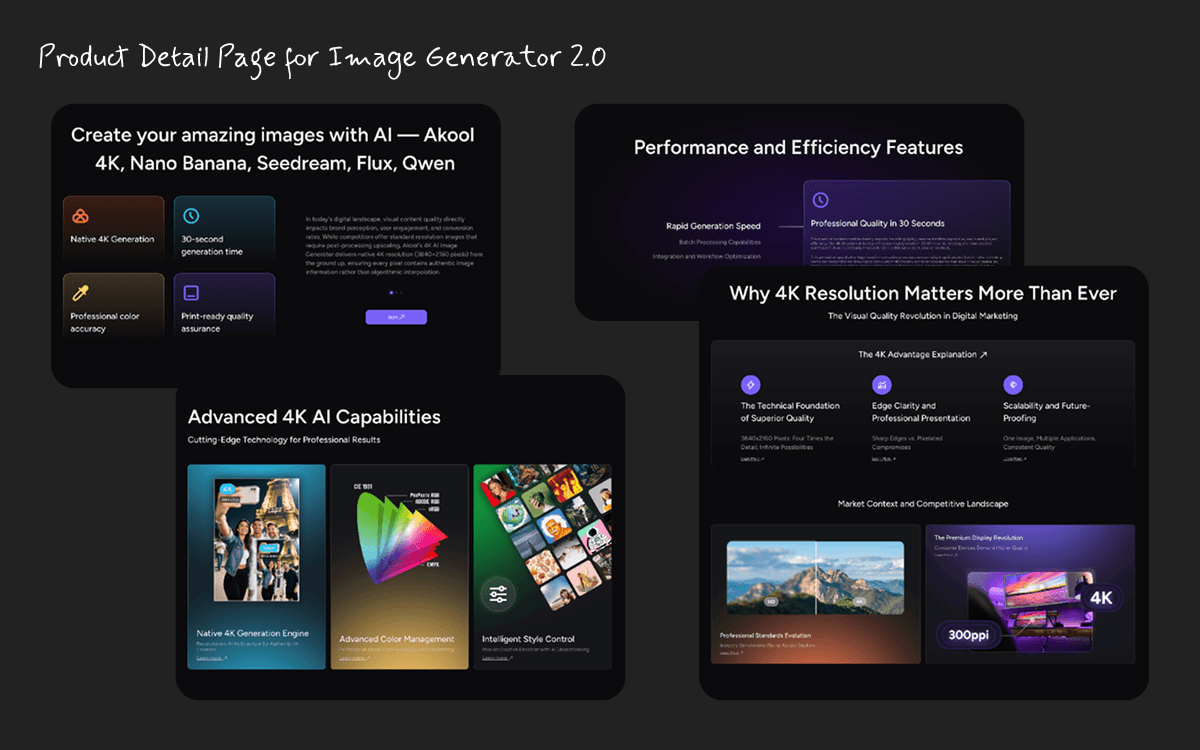
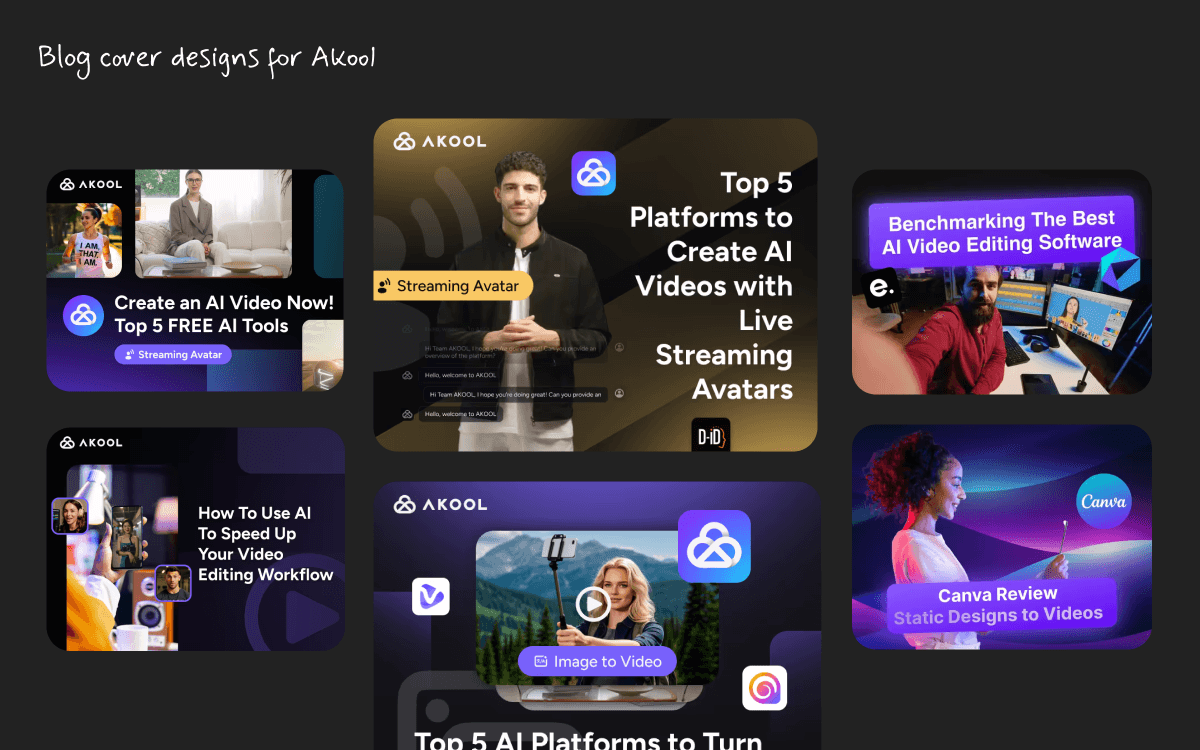
Product Extensions
Includes mobile app feature designs, an Adobe Express plugin, new product pages, and marketing covers, all designed by me.